
🌀 Tai Chi and Physical Therapy: A Powerful Partnership
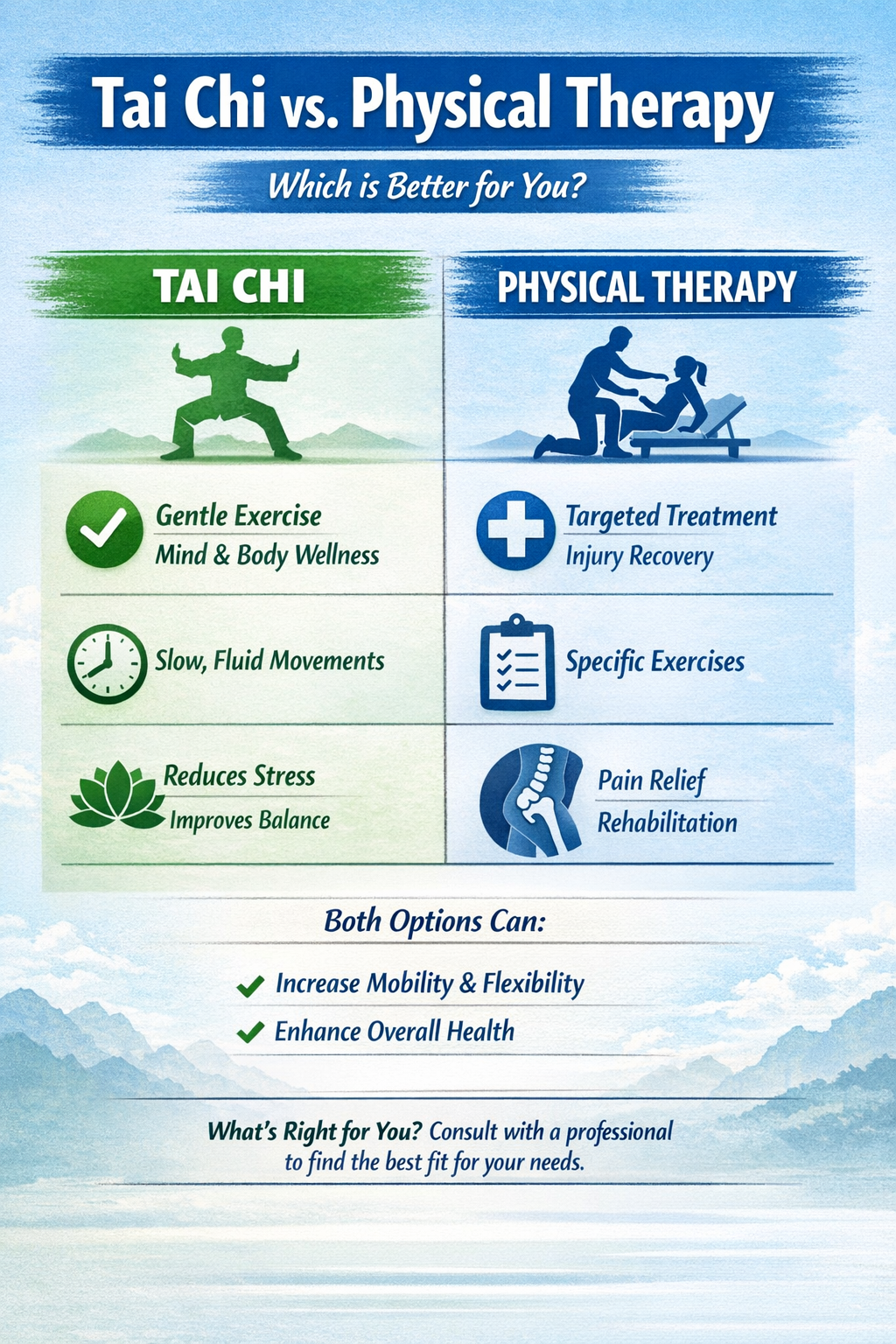
Over the years, I’ve worked with many students recovering from injury or surgery—often referred by their doctors or physical therapists. Time and again, Tai Chi has proven to be a transformative addition to their rehabilitation.
Once seen as a “newfangled” Eastern art, Tai Chi is now recognized as a science-backed tool that bridges clinical treatment and daily life. While traditional physical therapy (PT) focuses on isolating specific muscles or joints, Tai Chi treats the body as an interconnected whole—enhancing recovery in a holistic, sustainable way.
🌟 Core Benefits in a Clinical Setting
Tai Chi complements PT by addressing key areas of healing:
• Balance & Fall Prevention: Especially helpful for older adults and those with Parkinson’s. Learning to “differentiate empty and full” (weight shifting) strengthens legs and improves proprioception.
• Joint Health: Gentle, circular movements increase synovial fluid circulation—nourishing cartilage without impact. Ideal for osteoarthritis and post-surgery recovery.
• Functional Strength: Builds real-world strength through eccentric muscle control—great for standing, walking, and daily tasks.
• Pain Management: Mindful movement helps break the pain-fear-avoidance cycle, easing chronic pain and inflammation.
📚 Evidence for Specific Conditions
• Knee Osteoarthritis: Tai Chi is as effective as standard PT for pain relief and function improvement. Source
• COPD & Cardiac Rehab: Boosts physical capacity and quality of life—without the breathlessness of treadmills. Source
• Neurological Recovery: Improves gait and ground awareness for those with stroke history or peripheral neuropathy. Source
✨ Whether you're recovering from surgery or managing a chronic condition, Tai Chi offers a gentle, effective path forward. Curious how it works? Come join us at Seeking Tai Chi and experience the difference